The Ultimate Setup Guide for Your Fujifilm Instax Wide Evo
The arrival of the Fujifilm Instax Wide Evo marks a significant milestone in the evolution of instant photography. For years, enthusiasts were forced to choose between the tactile, nostalgic charm of analog instant film and the precision and convenience of digital photography. The Wide Evo bridges this gap, taking the hybrid technology popularized by the Instax Mini Evo and applying it to the expansive "Wide" format. This guide provides an exhaustive look at how to master this sophisticated tool, ensuring that every frame captured is a masterpiece of both modern technology and classic aesthetic.
Understanding the Hybrid Philosophy
To set up the Instax Wide Evo effectively, one must first understand its core philosophy. Unlike traditional analog cameras where the shutter press directly exposes the film, the Wide Evo is a digital camera with a built-in film printer. This distinction is vital for setup because it grants the user the power of "selective printing." Instead of wasting expensive film on a blurry shot or a closed-eye portrait, users can review images on the rear LCD, apply digital effects, and print only their favorites. The digital sensor acts as a gateway, providing a layer of security that traditional instant photographers never had.
The "Wide" format itself is double the size of the standard Instax Mini, measuring 86mm x 108mm. This increased real estate makes the Wide Evo particularly suited for group shots, landscapes, and professional event photography where detail and scale matter. Setting up the camera requires a balance between configuring the digital internal settings and managing the physical film loading process.
Initial Physical Configuration and Film Loading
The setup process begins with battery management. The Instax Wide Evo features an integrated lithium-ion battery charged via a USB-C port. Before heading out for a shoot, it is recommended to charge the device until the status light turns off, typically taking two to three hours. A full charge generally provides enough power for approximately 100 prints, though digital-only usage will last significantly longer.
Once powered, the next step is loading the Instax Wide film. Users should open the rear film door by sliding the locking mechanism. It is crucial to handle the film pack only by its edges. Inside the film chamber, a yellow mark on the camera body corresponds to a yellow strip on the film pack. Aligning these marks and dropping the pack into place ensures a light-tight seal. Upon closing the door, the camera will automatically eject the black protective film cover. During this stage, the most important rule of instant photography applies: never open the film door until the counter reaches zero, as exposing the film to ambient light will ruin the remaining frames.
Navigating the Digital Interface and Lens Effects
The heart of the Wide Evo's creative power lies in its dual-dial system. There are 10 lens effects and 10 film effects, which can be combined to create 100 distinct visual styles. Dialing in these settings is the most critical part of the digital setup. The lens dial, located around the physical lens assembly, allows users to toggle through options like "Vignette," "Soft Focus," "Blur," and "Double Exposure."
Simultaneously, the film effect dial on the top of the camera body adjusts the color science of the image. Options such as "Vivid," "Pale," "Sepia," and the highly acclaimed "Rich" mode allow the photographer to mimic various film stocks. Most professional users tend to favor the "Rich" film setting combined with the "Normal" lens setting for day-to-day use, as it provides deep blacks and high-contrast saturation that looks most like classic professional analog film. For those seeking a dreamier, more nostalgic look, pairing the "Retro" film effect with the "Light Leak" lens effect creates a convincing vintage aesthetic without the unpredictability of actual aged film.
Looking for the best Cameras & Photography deals on Amazon?
See Deals →In-Depth Product Analysis and Performance
The Instax Wide Evo is a masterclass in ergonomics and design. Its faux-leather texture and silver accents give it the weight and feel of a premium rangefinder camera, which is a departure from the plastic, toy-like feel of previous Instax Wide models. The inclusion of a dedicated print lever is perhaps the most satisfying tactile element of the setup. Pulling the lever mimics the film advance arm of a vintage 35mm camera, but here it serves as the final confirmation to commit a digital image to physical film.
In terms of technical performance, the camera utilizes a 1/5-inch CMOS sensor with a primary color filter. While the resolution might seem modest compared to modern smartphones, it is perfectly optimized for the 800 x 1260 dot printing resolution of the Instax Wide film. The fixed 28mm (equivalent) f/2.0 lens provides a wide field of view that is versatile enough for almost any scenario. One of the standout features of the Wide Evo's digital setup is the exposure compensation. Users can adjust brightness in increments of 1/3 EV, which is essential when shooting in high-contrast environments like snowy landscapes or bright beaches where the automatic metering might otherwise underexpose the subject.
Advanced Setup: The Smartphone App Integration
The Wide Evo experience is significantly enhanced by the dedicated smartphone application. Setup involves pairing the camera via Bluetooth, which unlocks three primary functions: Remote Shooting, Image Transfer, and Direct Printing. The Remote Shooting feature is invaluable for group portraits, allowing the photographer to see a live view on their phone and trigger the shutter from a distance. The Image Transfer feature allows users to send photos taken on the Evo to their phone, complete with a "digital print" frame that makes them ready for social media sharing. Conversely, the Direct Printing feature turns the Wide Evo into a portable printer for any photo stored on a smartphone, making it a versatile tool for those who prefer to edit their photos in more robust mobile applications before printing.
Pros and Cons of the Fujifilm Instax Wide Evo
Every camera system involves trade-offs. The Wide Evo is a specialized tool that excels in specific areas while maintaining some limitations inherent to the instant format. Below is an analysis of the strengths and weaknesses identified by long-term users and professional reviewers.
- Digital Preview Advantage: The ability to see the photo before printing is the ultimate cost-saving measure. It eliminates the frustration of "wasted" prints due to poor timing or lighting.
- Superior Build Quality: Unlike the bulky and plastic Wide 300, the Evo feels like a professional instrument. It is compact enough to fit in a small messenger bag despite the large film format.
- Versatile Creative Controls: The 100 combinations of lens and film effects allow for immense creative expression without needing to carry physical filters.
- Dual Shutter Buttons: Features two shutter buttons—one for landscape and one for portrait orientation—making it comfortable to hold regardless of the composition.
- Micro SD Support: While the internal memory holds about 45 images, the addition of a Micro SD card slot allows for thousands of captures, essentially making it a viable digital backup camera.
- Sensor Size Limitations: The small digital sensor means that in very low light, the digital preview can look noisy. While the printed results are usually better, it requires careful steadying of the camera.
- Fixed Focus: The lens is a fixed-focus design optimized for 0.1m to infinity. While it handles close-ups well, it lacks the tack-sharp precision of an autofocus system found in higher-end mirrorless cameras.
- Film Cost: While the digital nature saves money by preventing bad prints, the Instax Wide film is still a recurring expense that users must budget for.
- Charging Port Transition: While many newer models use USB-C, ensuring you have the correct cable and power brick is essential as the battery is not user-replaceable in the field.
Technical Comparison: Wide Evo vs. Predecessors
Understanding where the Wide Evo sits in the market helps buyers justify the investment. It essentially takes the throne previously held by the purely analog Wide 300 and the smaller Mini Evo.
| Feature | Instax Wide Evo | Instax Wide 300 | Instax Mini Evo |
|---|---|---|---|
| Type | Hybrid (Digital/Instax) | Analog | Hybrid (Digital/Instax) |
| Film Format | Instax Wide | Instax Wide | Instax Mini |
| LCD Screen | 3.0-inch TFT Color | None | 3.0-inch TFT Color |
| Internal Memory | Yes + Micro SD Slot | None | Yes + Micro SD Slot |
| Creative Effects | 100 Combinations | None | 100 Combinations |
| Power Source | Built-in Li-ion | 4 x AA Batteries | Built-in Li-ion |
Buying Guide: Who Should Get the Wide Evo?
The Instax Wide Evo is specifically designed for a few distinct types of photographers. First, it is the ideal choice for Event Professionals. Designers, wedding photographers, and party planners often use instant film to provide guests with immediate mementos. The Wide Evo's ability to print multiple copies of the same photo (by simply pulling the lever again) makes it significantly more efficient for events than analog models.
Second, it appeals to Fine Art Enthusiasts. Those who enjoy the "dreamy" aesthetic of Lo-Fi photography but want the control of digital editing will find the Wide format's extra detail and the Evo's suite of filters to be a perfect sandbox. The Wide format provides a "cinematic" aspect ratio that the Mini format lacks, making it better for serious landscape or architectural work.
Shop the latest Cameras & Photography picks on Amazon.
See Deals →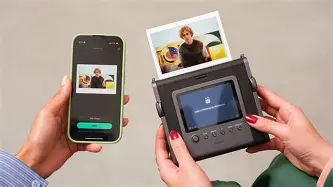
Finally, for Memory Keepers and Journalers, the Wide Evo is a powerhouse. Because you can print directly from your phone, the camera doubles as a high-quality home printer for your existing digital library. Buyers should consider if they prefer the larger physical size of the Wide prints over the portability of the Mini. If you intend to carry the camera in a pocket, the Mini Evo remains the better choice; if you want the "statement" of a large, high-impact photo, the Wide Evo is unrivaled.
Real-World Setup Tips for Best Results
To truly get the most out of the Wide Evo, consider these operational tips. First, manage your lighting. While the camera has a built-in flash, the best results are almost always achieved in bright, indirect natural light. If shooting indoors, keep your subject close to the background to avoid the "black hole" effect common in flash photography, where the subject is illuminated but the background falls into total darkness.
Second, utilize the "Rich" mode for skin tones. The "Rich" setting adds a slight warmth and depth to shadows that is particularly flattering for portraits. Conversely, if you are shooting a minimalist architectural scene, switching to "Monochrome" film mode with the "Vignette" lens effect can produce striking, gallery-ready results.
Third, be mindful of the "Print History." The camera stores a record of your recently printed images. If you are sharing the camera at a party, you can quickly navigate back to a popular shot and print duplicates for everyone in the group without having to retake the photo. This is a feature of the digital setup that saves both time and social effort.
Conclusion
Setting up the Fujifilm Instax Wide Evo is a journey of blending two different eras of photography. By taking the time to understand the physical requirements of the Wide film format and the digital depth of the Evo’s internal software, photographers can unlock a level of creative freedom that was previously impossible in the instant world. Whether it is the satisfying click of the lens dial or the anticipation of watching a large-format print develop in the palm of your hand, the Wide Evo offers a tactile and rewarding experience. It stands as a testament to the idea that we do not have to abandon the past to enjoy the benefits of the future. With the right configuration, some thoughtful experimentation with effects, and a keen eye for composition, the Instax Wide Evo becomes more than just a camera—it becomes a bridge between a fleeting moment and a lasting, physical memory.