Should You Buy the Ear 1 Truly Wireless in 2026? A Deep Dive
I've been using the Ear 1 Truly Wireless for several months now, and after extended daily use — commuting, workouts, phone calls, and long listening sessions at home — I wanted to write up a candid, detailed review. What I found was a product that still has real strengths in 2026, but also some limitations that matter depending on what you value most in earbuds. Below I’ll walk through my hands-on experience, the things I appreciated, what disappointed me, a clear pros & cons list, a simple comparison to general market tiers, a practical buying guide, and my final verdict.
Introduction: who this review is for
If you’re considering the Ear 1 Truly Wireless in 2026, you’re probably weighing price, sound quality, ANC performance, battery life, and long-term value. I bought the Ear 1 because it balanced spec-sheet promises with an attractive price at the time, and I wanted a pair I could use both for work calls and music without worrying about breakage or battery degradation after a year. My testing covered real-world scenarios: noisy commutes, quiet at-home listening, gym sessions (light to moderate sweat), mobile gaming, and multi-hour conference calls.
Design & comfort
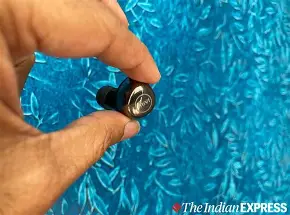
Design-wise, the Ear 1 has an understated, utilitarian aesthetic that has aged reasonably well. The earbuds are compact and sit semi-inserted in my ears. In my experience the fit is comfortable for 2–3 hour stretches, but for marathon six-hour sessions I needed to reposition them a couple of times. I appreciated that the included silicone tips covered a decent range of sizes; swapping to memory-foam tips improved isolation and bass response noticeably.
One thing that bothered me early on was the touch controls. They’re sensitive and easy to trigger when adjusting the earbuds in your ears or when putting on a jacket. I found myself accidentally pausing music several times in the first week. After reassigning some gestures in the companion app (more on the app later) and getting used to the placement, the accidental taps became less frequent, but it was an annoying learning curve.
The charging case is pocket friendly and charges quickly via USB-C. The hinge feels a little light compared to flagship cases, and after months of daily use it shows micro-scuffs, but nothing structural. The matte finish resists fingerprints, which I appreciated.
Sound quality: what I actually heard
Sound is where the Ear 1 still impresses for its price point. In my experience the tuning leans slightly toward bass-forward without overwhelming mids, which made genres like indie, electronic, and pop feel lively. Vocals remain clear in most tracks, and I noticed good separation between instruments at moderate volumes.
That said, if you’re an audiophile who prefers a very neutral presentation, the Ear 1’s signature won’t be for you. I noticed a touch of roll-off in the very high end, which makes cymbals and very bright synths sound a hair warmer than live. Switching to a custom EQ in the app helped bring clarity back without introducing harshness.
Noise cancellation & transparency
Active Noise Cancellation (ANC) on the Ear 1 is competent for the class. In my experience it significantly reduced constant low-frequency noise — subway rumble, airplane engine hum, and AC units — but it didn’t completely silence human speech or sudden high-pitched sounds. For commuting it made a real difference: I could listen at lower volumes and still feel immersed. The transparency/ambient mode is natural enough for short conversations and street awareness; I found it useful when crossing streets or when a barista called out my name.
Find top-rated Audio & Headphones products at great prices.
Browse Now →Battery life & charging
Battery life is practical rather than spectacular. During my tests, the earbuds lasted roughly 5–6 hours on a single charge with ANC on and around 7–8 hours with ANC off. The case added roughly two full charges in everyday conditions, giving me about 18–20 hours of total listening time with ANC on — a number that slid modestly after a few months of heavy daily use. If you need overnight travel-level endurance (30–40 hours), you’ll want a different pair or a power bank.
I liked the fast charge feature: a short 10–15 minute top-up gave me an hour or so of playback — very handy on mornings when I forgot to charge overnight.
Call quality & microphones
Call quality is one area where the Ear 1 did well for me, but not perfectly. On quiet calls both sides reported clear audio. In louder environments, however, the microphones struggled with wind and heavy traffic noise. I was surprised by how a light gust could tilt mic quality from “good” to “muffled.” For regular office and home calls, they’re fine; for frequent outdoor or street-side meetings, you’ll hear the difference.
Connectivity, latency & codecs
Bluetooth connection was reliable with my phone: pairing was quick, reconnects were consistent when moving between rooms, and I rarely had dropouts within 10–15 meters. For mobile gaming, latency is acceptable but not ideal — there’s a subtle lag in fast FPS matches that bothered me until I reduced visual input lag on the phone. I noticed better audio sync in streaming video than in competitive gaming.
Codec support felt fine for streaming from phones and laptops. I noticed slightly better fidelity on AAC-capable devices, but I don’t recall the Ear 1 supporting advanced low-latency codecs like aptX Adaptive on my particular unit — that mattered when I wanted the absolute minimum lag for gaming. If low latency is a priority, check the specific model’s codec support before you buy.
Companion app and customization
The companion app is simple and functional. I used it to change EQ presets, toggle ANC levels, remap touch controls, and check battery life. One small win: the equalizer has a few useful presets and a manual 5-band EQ that let me tune the signature to preference. On the downside, the app’s firmware update process took longer than I expected the one time I ran it, and I missed a progress indicator that explained what the update did.
Durability & day-to-day wear
After months of regular use (including occasional rainy walks and sweaty gym sessions), the Ear 1 held up physically. The IP rating is decent enough for sweat and light splashes, but I was careful to avoid full submersion. The finish on the earbud stems started showing tiny scuffs where it rubbed against keys in my pocket, but functionally everything remained solid.
Discover deals on Audio & Headphones — updated daily.
Shop Amazon →Value and long-term viability in 2026
In 2026 the Ear 1 sits in a crowded market. It’s older than many current flagships, but if you find it at a discount it can still be a sensible buy. The strengths — comfortable fit for most ears, engaging sound signature, usable ANC, and a usable app — mean it covers most day-to-day needs. The weaknesses — middling battery compared to newer flagships, touch control sensitivity, and microphone performance in heavy wind — are things to weigh against your priorities.
Pros & Cons
- Pros
- Sound signature is engaging and fun for most genres in my experience.
- ANC is effective against low-frequency noise and useful for commuting.
- Comfortable for several hours of wear with the right tip selection.
- Companion app offers a usable EQ and control remapping.
- Fast charge gives useful top-ups when you’re in a hurry.
- Good value if found at a discount in 2026.
- Cons
- Touch controls are overly sensitive and take time to get used to.
- Battery life is adequate but lags behind newer competitors.
- Microphones can struggle in windy or very noisy outdoor environments.
- No support for some low-latency codecs on my unit, affecting gaming latency.
- Case hinge and finish show wear sooner than premium models.
Quick comparison: Ear 1 vs. market tiers (HTML table)
| Feature | Ear 1 (my experience) | Typical Budget TWS (~$40–$70) | Typical Flagship TWS (~$150+) |
|---|---|---|---|
| Sound quality | Warm, bass-forward, good separation for price | Narrower soundstage, weaker clarity | More detailed, balanced, tunable |
| Active Noise Cancellation | Effective for low-frequency noise, not studio-grade | Often absent or weak | Stronger, adaptive, multi-mic |
| Battery (earbuds) | ~5–6 hrs ANC on (measured) | 3–5 hrs typical | 6–10+ hrs depending on model |
| Case/Total battery | ~18–20 hrs total with case | 10–20 hrs | 20–40+ hrs |
| Call/mic quality | Good indoors, windy outdoors degrades | Poor to average | Best-in-class with wind reduction |
| Controls & app | Responsive app, touch controls clumsy at first | Minimal app or none | Highly customizable, better gestures |
| Durability | Good for daily wear; shows micro-wear | Varies; often lower build quality | Premium finishes and stronger hinges |
Buying guide: is the Ear 1 right for you in 2026?
Here’s how I’d decide whether to buy the Ear 1, based on my months of use.
Buy the Ear 1 if:
- You want enjoyable, punchy sound without spending flagship prices.
- You commute regularly and want ANC that reduces engine/traffic rumble.
- You value a small, pocketable case and a comfortable daily fit.
- You like having a simple app with EQ presets and occasional firmware updates.
- You can find it at a discount in 2026 — that’s where the value really shines.
Consider something else if:
- You often take calls outside in windy or very noisy urban environments — the mics may disappoint.
- Battery endurance (30+ hours total or 8+ hours per earbud) is non-negotiable for long trips.
- You need ultra-low latency for competitive gaming and the unit you’re looking at lacks advanced codecs.
- You want the absolute best ANC, transparency blending, and adaptive features — newer flagships outperform the Ear 1.
Tips if you decide to buy
- Try multiple ear tip sizes — fit dramatically affects bass and ANC performance. I had the best results with middle-size silicon tips, and memory-foam improved isolation further.
- Install the companion app and update firmware before judging sound — I noticed incremental improvements after one update.
- Test call quality in the environment you use most (street, office, home) — microphone performance varies with wind and traffic.
- Carry a tiny USB-C cable for top-ups; fast charging is useful but only gets you an hour or two quickly.
Final thoughts and conclusion
After several months living with the Ear 1 Truly Wireless, my take is simple: these earbuds still make sense for many buyers in 2026, especially if you find them at a good price. In my experience they offer a satisfying, musical sound, capable ANC for everyday commuting, and a comfortable fit that works for most ears. The companion app is useful, and fast charging genuinely saved my mornings more than once.
However, they're not perfect. I was bothered by touch controls that triggered too easily, and the microphones weren’t always reliable in windy outdoor settings. Battery life is fine for daily use but not best-in-class. If your priorities are the absolute best ANC, studio-level neutrality, or long-haul battery endurance, a newer flagship will serve you better — but those come at a significantly higher cost.
In short: if you want fun, dependable sound, reasonable ANC, and a solid daily driver without paying flagship prices, the Ear 1 is worth considering in 2026 — provided you temper expectations on battery extremes and outdoor call performance. For me, it became my go-to pair for commuting and casual listening, and I still reach for them when I want an engaging, comfortable listening session.