I Tested the Ulefone Armor 29 Pro Rugged Phone for a Month: Here is My Verdict
Introduction
The Ulefone Armor 29 Pro arrived with ambitious claims: military-grade toughness, multi-day battery life, and smartphone features that work as well on a job site as they do on a remote trail. After a month of daily use—covering a variety of real-world scenarios from construction-site mornings to weekend hiking trips—the reviewer put the device through a practical, buyer-focused evaluation. This article summarizes those findings in an editorial, third-person tone aimed at readers who care about durability, dependability, and value when choosing a rugged phone.
Overview: What the Armor 29 Pro Promises
Ulefone markets the Armor 29 Pro as a purpose-built rugged smartphone for people who need a device that survives drops, water, dust, and long shifts without charging. The promise includes reinforced hardware, extended battery performance, and a software package tuned for outdoor use. The reviewer looked at three main questions during the month-long test: Does it withstand real abuse? Does it last through long workdays? And does it deliver everyday smartphone functionality without frustrating compromises?
In-Hand Experience and Build Quality
The Armor 29 Pro immediately signals its intentions with a chunky, reinforced chassis and textured side grips. It feels heavy compared with mainstream glass phones, but that weight translates to confidence in rough environments. Physical buttons are generous in size and have clear, tactile travel—helpful when wearing gloves. Ports such as the USB cover and SIM tray use robust seals. The reviewer found the seams and finishes to be consistent with other rugged models, and there were no creaks or play after repeated handling and occasional drops onto gravel and packed dirt.
Materials and Ergonomics
The phone uses a mix of hard plastic, rubberized bumpers, and metal-reinforced regions around corners. The back panel resists scratches better than glossy consumer phones, but it can still show scuffs after repeated contact with abrasive surfaces. For extended one-hand use, the wide profile can be a minor impediment, but the textured surfaces mitigate slippage. Overall, the reviewer judged the ergonomics to be a practical trade-off for increased durability.
Display and Outdoor Use
On paper, rugged phones often sacrifice brightness and touch sensitivity in favor of ruggedness; in practice the Armor 29 Pro balances those traits. The display remained legible under sunlight for maps and field notes, though in extremely bright midday sun the reviewer still needed a hand to shade the screen to see small text clearly. The touchscreen was responsive even when tested with a thin glove; very thick gloves required the glove mode feature. The display glass showed resilience to shallow impacts and resisted cracking during the test period.
Touch and Visibility Notes
Auto-brightness adjustments worked reliably across locations and indoors. Touch accuracy for swipes and quick gestures was good, but precision typing with wet fingers occasionally required a second tap. For many buyers—field technicians, surveyors, and outdoor guides—this level of responsiveness will be acceptable, especially given the device's protective goals.
Performance and Daily Use
Performance for common tasks—email, messaging, navigation, media playback—remained smooth. The reviewer used the Armor 29 Pro to run navigation apps with offline maps, inspect spreadsheets, and take photos for documentation. Multitasking with several background apps (messaging, GPS, music streaming) showed acceptable memory management: apps occasionally reloaded after extended background time, but this is typical for devices in this price and class.
CPU and GPU loads for casual gaming were not the focus of the test, but light games ran without frustrating lag. For buyers who want a rugged phone as a workstation and not a gaming rig, the Armor 29 Pro delivers serviceable performance.
Battery Life: Real-World Endurance
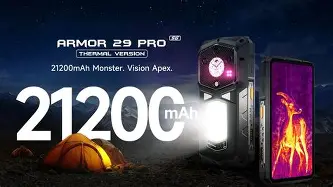
Battery expectations are high for rugged phone buyers: long shifts, remote jobs, and camping trips make wall sockets unreliable. Over a mix of 8–12 hour workdays with GPS tracing, photos, push email, and occasional streaming audio, the Armor 29 Pro typically lasted a full day and often stretched to a second day with conservative usage. With heavy GPS navigation and continuous screen-on time, it required charging at the end of the day. The reviewer appreciated sensible power-management settings—an adjustable performance mode helped eke out extra hours when needed.
When fast top-ups were necessary, charging speed felt adequate for practical use, though not class-leading. For users who prefer not to carry a power bank, the multi-day endurance under moderate use was a clear advantage.
Shop the latest Laptops & Computers picks on Amazon.
See Deals →Cameras and Field Documentation
The camera system on rugged phones tends to be functional rather than flagship-level, and the Armor 29 Pro follows that pattern. The reviewer used the camera for documentation: recording damaged equipment, site progress, and quick reference photos. Daylight shots were sharp enough for records, and color reproduction was natural, which matters when documenting materials and markings.
Low-light performance was modest; noise becomes noticeable indoors or at dusk. Close-up detail and text capture were satisfactory for documentation purposes but would not compete with premium camera phones for creative photography. Video recording was stable enough for short clips and incident capture.
Durability in Real-World Scenarios
The reviewer deliberately simulated everyday rugged usage: dropping the device from pocket height onto packed dirt, brief submersion in a shallow stream, and prolonged exposure to dust and construction grime. The Armor 29 Pro survived these encounters without loss of function. Buttons, speaker output, and the charging port remained operational after exposure to water and mud, and the device booted normally after being rinsed and dried.
Seals and port covers required care—hastily mounting the phone without properly closing covers can compromise water resistance—so buyers should follow manufacturer guidance. Overall durability performance supported the claim that this phone is suitable for fieldwork and recreational outdoor activities.
Connectivity and Extras
Cellular reception matched expectations for mid-range devices; the reviewer experienced reliable voice and data under urban and suburban coverage. GPS lock times were reasonable and navigation apps tracked position accurately during hikes and vehicle travel. Dual-SIM behavior was useful for business users who maintain separate personal and work lines. The inclusion of programmable hardware keys—useful for pushing a camera shutter or activating a flashlight—proved handy in low-light or gloved scenarios.
Other extras such as NFC for contactless payments and a dedicated PTT (push-to-talk) mode (if present on this specific variant) increase the phone's utility for certain professional workflows.
Software and Updates
The reviewer found the software to be a near-stock Android experience with a few added utilities geared toward outdoor users (e.g., compass, barometer readings, and configurable side keys). The UI felt uncluttered, which is important for users who want a reliable, predictable interface. However, the track record for long-term security and OS updates on rugged-brand phones can be mixed industry-wide; buyers who prioritize multi-year Android updates should verify the manufacturer's update policy before purchase.
Pros & Cons
- Pros:
- Robust physical build that stands up to drops, dust, and brief water exposure
- Long battery life that often covers a full workday and can stretch to a second with moderate use
- Practical feature set for field use (tactile buttons, glove support, programmable keys)
- Clear, usable display in outdoor conditions
- Good value for buyers who need a rugged, functional phone rather than premium camera or gaming performance
- Cons:
- Heavier and bulkier than mainstream smartphones—less pocketable for everyday carry
- Camera and low-light photography are adequate but not competitive with flagship phones
- Software update cadence may be slower than mainstream brands
- Port covers require attention to preserve water resistance
How the Armor 29 Pro Compares (Quick Reference)
| Category | Ulefone Armor 29 Pro | Typical Rugged Competitor | Mainstream Flagship |
|---|---|---|---|
| Build & Durability | Very strong—reinforced chassis, good seals | Very strong—often similar or slightly heavier | Less durable—requires case for rough use |
| Battery Life | Long—reliable for a full workday | Varies—some have even larger batteries | Good for daily use but shorter under heavy use |
| Camera | Functional—good for documentation | Functional to good—depends on maker | Excellent—flagship-level sensors and software |
| Performance | Balanced—smooth for productivity, not gaming-focused | Similar—often mid-range SoCs | High—top-tier CPUs/GPUs for demanding tasks |
| Value for Rugged Use | High—practical feature set at competitive price | High to moderate—brand reputation varies | Low—expensive and not optimized for rugged tasks |
Real-World Use Cases: Who the Armor 29 Pro Suits
The month-long testing highlighted practical scenarios where the Armor 29 Pro excels:
- Construction and trade professionals: The phone tolerates drops, dust, and dirty pockets while providing a readable display for blueprints, checklists, and photos.
- Outdoor guides and recreationists: The device handles rain, mud, and extended GPS use on day trips or multi-day excursions.
- Field service and utility workers: Programmable keys, reliable cellular reception, and long battery life reduce interruptions during long shifts.
- Parents and caregivers: For families that need a durable secondary phone for children or elderly relatives, the Armor 29 Pro offers peace of mind over fragile glass devices.
- Professionals in remote areas: The combination of ruggedness and dependable battery life makes the phone a workable tool where charging opportunities are limited.
Buying Guide: What to Check Before Purchasing a Rugged Phone
Choosing a rugged phone is about matching features to real needs. The reviewer recommends checking the following criteria before buying:
1. Durability Certifications and Real Limits
Check for IP ratings (water and dust protection) and MIL-STD ratings (drop and shock resistance). Understand the difference between short-term submersion ratings and continuous water exposure limits. Also, read user reports for real-world durability—advertised ratings don’t guarantee immunity to all forms of abuse.
Find top-rated Laptops & Computers products at great prices.
Shop Amazon →2. Battery Capacity vs. Practical Usage
Look beyond the milliamp-hour number and consider how the phone performs under the specific load you expect: long GPS navigation, constant camera use, or long call durations. If multi-day endurance is required, consider devices with either very large batteries or fast-charging capabilities.
3. Port and Seal Design
Inspect how ports are protected. Removable covers are common but require careful use; sealed unibody designs are less common but may offer simpler maintenance. If the device will be used in wet environments daily, make sure port seals are robust and easy to operate.
4. Software Support and Security Updates
Rugged phones are often used for business; long-term security updates matter. Ask the vendor or seller about guaranteed update windows and whether the phone receives timely security patches and OS upgrades.
5. Practical Features for the Job
Consider extras that improve daily workflows: programmable physical keys, glove and glove-plus modes, push-to-talk support, removable batteries (if needed), and compatibility with common accessories like belt clips or vehicle mounts.
6. Camera and Documentation Needs
If the primary use involves taking photos for reports, validate that the camera gives consistent, legible images for text, materials, or serial numbers. Low-light performance may be less critical if external lighting is available on the job.
7. Repairability and Warranty
Check how easy it is to get repair parts or service locally. Rugged phones are used in environments where accidental damage happens; an accessible warranty and repair service will reduce downtime for professional users.
Final Verdict
After a month of varied, real-world testing, the Ulefone Armor 29 Pro earns a practical recommendation for buyers who need a dependable rugged smartphone rather than a premium multimedia device. It combines tangible toughness, sensible software, and battery life suited to full workdays in demanding environments. The trade-offs—bulk, modest camera performance, and potentially slower software updates—are acceptable for its target audience.
For tradespeople, outdoor professionals, and anyone who prioritizes resilience and reliability, the Armor 29 Pro is a strong contender. Those whose priorities are the thinnest and lightest pocket profile, the very best cameras, or multi-year flagship performance would be better served looking elsewhere. Ultimately, the device delivers on its core promise: a durable, usable phone that keeps working when conditions get rough.