Don't Buy the Ghost Of Yotei Until You Read This Full Analysis
The announcement of Ghost of Yotei has sent ripples through the gaming community, sparking both intense excitement and meticulous scrutiny. As the successor to the critically acclaimed Ghost of Tsushima, Sucker Punch Productions faces the monumental task of following up on a title that defined the open-world samurai genre for many. Set hundreds of years after the exploits of Jin Sakai, this new entry shifts the perspective to a new protagonist, Atsu, and a new location: the lands surrounding Mount Yotei in Ezo, modern-day Hokkaido. For consumers considering whether this title deserves a spot in their library or a pre-order on their console, understanding the shift in historical context, gameplay mechanics, and technical advancements is essential.
This analysis dives deep into the known quantities of the game, the creative directions the developers are taking, and the practical considerations for players who value narrative depth, mechanical precision, and visual fidelity. While the legacy of the "Ghost" brand carries significant weight, Ghost of Yotei is positioning itself as a departure in several key ways, moving away from the rigid structure of the organized samurai clans of the Kamakura period and into the more rugged, lawless frontiers of the 1600s.
In the world of consumer electronics and interactive entertainment, the "buy or wait" decision often hinges on how well a sequel addresses the limitations of its predecessor while carving out its own identity. By examining the available data and the historical precedent set by the developer, this guide provides the necessary context to determine if this journey to the north is the right investment for your time and resources.
The Evolution of the Ghost: A Product Overview
Ghost of Yotei is not a direct sequel in the traditional sense. It is a thematic successor that expands the "Ghost" universe. Set in 1603, the game takes place more than 300 years after the Mongol invasions of Tsushima. This leap in time is a bold choice for the franchise, as it allows the developers to explore a vastly different era of Japanese history—one that coincides with the beginning of the Edo period. For the consumer, this means the world will feel fundamentally different from the one Jin Sakai occupied. The armor, the weapons, and even the social structures are in flux.
The focal point of the experience is Mount Yotei, a stunning peak in what was then known as Ezo. Unlike the settled and structured society of Tsushima, Ezo during this period was a frontier. It was outside the direct control of the Shogunate for much of this time, populated by the indigenous Ainu people and Japanese settlers, traders, and Ronin seeking to escape the mainland's strict laws. This setting provides a "wild west" atmosphere that will likely dictate the flow of exploration and combat. Players can expect a landscape that is less about defending a homeland and more about surviving in a beautiful but unforgiving wilderness.
Technically, Ghost of Yotei is being built from the ground up for current-generation hardware. This is a critical distinction for buyers. While Ghost of Tsushima was a PlayStation 4 masterpiece that received a high-quality director's cut for the PlayStation 5, Yotei is untethered from the constraints of older systems. This allows for significantly greater environmental density, improved lighting systems, and more complex AI behaviors. For those who prioritize the "wow factor" of high-end consumer electronics, this title is aiming to be a showcase of modern rendering capabilities.
Core Gameplay Mechanics and Innovations
The gameplay of Ghost of Yotei is expected to refine the "easy to learn, hard to master" philosophy of the first game. The swordplay, which relied heavily on timing, parries, and stance switching, remains the foundation. However, the 1607 setting introduces new variables—most notably, the proliferation of firearms. While early black-powder weapons were present in the first game, the Edo period saw more advanced matchlock rifles and pistols becoming part of the landscape of conflict. This adds a new layer to the "Ghost" versus "Samurai" dichotomy. Players must now account for long-range ballistic threats that are more accurate and deadly than the Mongol fire arrows of the past.
Exploration is another area where the electronics and software integration shines. The "Guiding Wind" mechanic is likely to return in some form, but the developers have hinted at more organic ways to interact with the world. With the power of modern SSDs, the transition between cinematic moments and gameplay is seamless, and the draw distances allow players to plot their course by literally looking at landmarks on the horizon rather than relying on a 2D map overlay. This immersion is a key selling point for enthusiasts who want to get the most out of their high-dynamic-range (HDR) displays and spatial audio setups.
The switch to a female protagonist, Atsu, also suggests a different narrative tone. Without the heavy burden of the Sakai family legacy or the strict Bushido code that Jin Sakai struggled with, Atsu's journey can be more personal, perhaps driven by vengeance or a specific quest for justice in a lawless land. This change in perspective is a significant factor for players who value character-driven storytelling over repetitive open-world tropes.
Shop the latest Electronics picks on Amazon.
View Offers →Technical Performance and Visual Fidelity
When analyzing a high-profile release in the electronics category, performance metrics cannot be ignored. Ghost of Yotei is targeting consistent 60 frames per second (FPS) performance while maintaining high resolutions. The use of advanced particle effects—a hallmark of the first game—has been turned up significantly. From the swirling snow of the northern mountains to the dense fields of wildflowers that react to the player's movement, the world is designed to be alive.
Furthermore, the haptic feedback and adaptive triggers of modern controllers are being used to simulate the tension of the bowstring, the resistance of a sword clash, and the rhythmic gallop of a horse across varying terrain. For the buyer who has invested in a premium gaming setup, these sensory details are what justify the purchase of a flagship title over a budget alternative. The game acts as a benchmark for what the current generation of console hardware can achieve when pushed by a premiere first-party studio.
Pros and Cons: Evaluating the Value Proposition
Every major product release comes with trade-offs. To help you decide if Ghost of Yotei aligns with your preferences, we have outlined the primary advantages and potential drawbacks based on the current state of the game's development and historical series performance.
- Pro: Cutting-Edge Visuals - Built natively for current-gen hardware, the game offers unparalleled environmental detail, lighting, and weather effects that serve as a showcase for high-end displays.
- Pro: Fresh Setting and Era - Shifting to 1603 Ezo provides a unique atmosphere that moves away from the traditional samurai fortress aesthetics into a rugged, mountainous frontier.
- Pro: Refined Combat Systems - The integration of era-appropriate firearms alongside traditional katana combat adds a strategic layer that was largely absent from the previous entry.
- Pro: Narrative Independence - By starting a new story with a new character, the game remains accessible to newcomers while offering deep lore for returning fans of the franchise.
- Pro: Atmospheric Immersion - Excellent use of spatial audio and haptic feedback ensures that the player feels connected to the world of Atsu and Mount Yotei.
- Con: The "Sequel Curse" - Following a game as perfect as Ghost of Tsushima creates immense pressure; there is always a risk that the new mechanics might not feel as revolutionary as the first time.
- Con: Hardware Barriers - As a current-gen exclusive, players who have not yet upgraded from older console hardware will be unable to access the title.
- Con: Open-World Fatigue - While the setting is new, the core loop of clearing outposts and collecting resources can sometimes feel repetitive in large-scale open-world games.
Comparison: Ghost of Tsushima vs. Ghost of Yotei
To better understand what has changed between the two "Ghost" titles, the following table compares the key features and specifications that influence the user experience.
| Feature | Ghost of Tsushima | Ghost of Yotei |
|---|---|---|
| Setting | Tsushima Island (1274) | Mount Yotei, Ezo (1603) |
| Protagonist | Jin Sakai (Male) | Atsu (Female) |
| Hardware Focus | PS4 / PS5 Cross-gen | Native Current-Gen Only |
| Primary Conflict | Mongol Invasion / Honor vs. Duty | Frontier Survival / Unknown Personal Quest |
| Weaponry | Katana, Tanto, Bows | Katana, Advanced Firearms, Traditional Tools |
| Environmental Tone | Structured, Clan-based, Coastal | Wild, Mountainous, Frontier-style |
| Technical Highlight | Particle effects and wind navigation | Advanced lighting, SSD-based density |
Buying Guide: Is Ghost of Yotei Right for You?
Investing in a new triple-A title is a commitment of both money and time. To ensure you make an informed decision, consider the following factors that define the target audience for this product.
Who Should Buy on Day One?
If you are an enthusiast of Japanese history or the samurai genre, Ghost of Yotei is almost a mandatory purchase. The attention to detail in the architecture, clothing, and combat styles is industry-leading. Furthermore, if you own a high-end 4K television with HDR10+ or Dolby Vision capabilities and a surround-sound system, this game is designed to be a "demonstration piece" for your home theater. Early adopters of the latest console hardware who are looking for a title that justifies their purchase will find Yotei to be one of the few games that truly utilizes the system's full power.
Who Should Wait for a Sale?
For players who are currently overwhelmed by their "backlog" of open-world games, it might be wise to wait. The Ghost series, while innovative, still follows the general structure of large-map exploration. If you find yourself tiring of icon-heavy maps and resource gathering, you may want to wait until the price drops or a "Complete Edition" with all future downloadable content is released. Additionally, if you are still playing on a standard 1080p display without HDR, you may not fully appreciate the visual leaps the developers have made, making a full-price purchase less urgent.
Considerations for Narrative Focus
Unlike many online multiplayer shooters or sports titles, Ghost of Yotei is a single-player, story-driven experience. Buyers who prioritize a compelling narrative will likely find value here. However, since the story is entirely separate from Jin Sakai's journey, those who were hoping for a direct continuation might need to adjust their expectations. The value here lies in the exploration of the "Ghost" legend across different ages, rather than the continuation of a single man's life.
Discover deals on Electronics — updated daily.
Shop Amazon →Analyzing the Technical Requirements
Ensure your setup is ready for this level of electronic entertainment. A high-speed HDMI 2.1 cable is recommended to handle the potential 4K/60FPS output with variable refresh rate (VRR) support. This will minimize screen tearing and ensure the smoothest possible experience during intense combat sequences. If your current setup lacks these features, your "purchase" of the game might also necessitate an "upgrade" of your peripherals to get the intended experience.
Real-World Use Cases and User Experience
When we look at how buyers typically interact with games like Ghost of Yotei, several use cases emerge. Understanding these can help you identify where you fit in the ecosystem.
The "Weekend Warrior" Gamer
Many buyers are professionals who only have a few hours on Saturday and Sunday to play. For this group, the "Guiding Wind" and intuitive UI of the Ghost series are massive benefits. You don't have to spend thirty minutes remembering where you were or how the controls work. The game is designed to be pick-up-and-play friendly while still offering depth for those who want to find it. This makes it a high-value item for people with limited free time.
The "Completionist" Collector
There is a significant subset of the electronics market that enjoys "platinum" trophies and 100% completion scores. Sucker Punch has a history of making these goals achievable and enjoyable rather than a chore. If you are the type of buyer who wants to see every corner of the map and find every hidden secret, Ghost of Yotei promises dozens, if not hundreds, of hours of content. In terms of "dollars per hour" of entertainment, it represents an excellent investment.
The Virtual Photographer
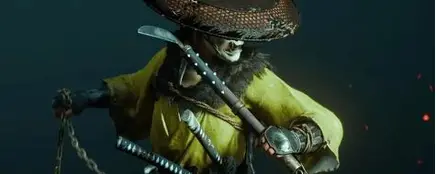
With the rise of social media sharing, the "Photo Mode" in modern games has become a feature in its own right. The first game set the bar with its wind-based animations and color grading options. Yotei is expected to take this further with even more robust camera tools. For some buyers, the game is as much a creative tool for digital photography as it is an action-adventure title. The beauty of the Mount Yotei region provides endless fodder for high-resolution captures.
Conclusion
Ghost of Yotei represents a pivotal moment for Sucker Punch and the "Ghost" franchise. By moving the clock forward and the location north, the developers have escaped the shadow of Jin Sakai while keeping the soul of what made the original game a masterpiece. For the consumer, it offers a refined, technically superior experience that leverages the full power of modern electronic entertainment hardware. The snowy peaks of Ezo and the glint of a matchlock rifle in the forest signify a new era of gameplay that promises to be both familiar and startlingly fresh.
Whether you should buy it depends on your appreciation for high-fidelity open-world games and your desire to see the evolution of one of gaming's most promising new IPs. While the "newness" of the protagonist and setting might give some pause, the technical foundations and the developer's track record suggest that this analysis's conclusion is positive: the journey to the north is likely worth the price of admission for anyone with the hardware to support it. As the Edo period begins within the game's timeline, a new legend is about to be written, and for players seeking the pinnacle of atmospheric action, Ghost of Yotei is a product that simply cannot be ignored.