D Link D501 5G Adapter vs Popsa Photo Book: Which Should You Buy?
I've been using both the D Link D501 5G adapter and Popsa's photo book service for several months now, and they served very different needs in my life: one kept me online when I wasn't at home, and the other turned my family photos into something I could hand to relatives. In this hands-on comparison I’ll walk through how each product performed in real-world use, what I appreciated, what disappointed me, and who I think should buy which one.
Why I tried both
Over the past year I’ve been traveling between a smaller town and a nearby city for work. My home broadband is solid, but when I’m in a rental or on the go, I wanted reliable, low-latency internet for video calls and backing up large photo libraries. That’s why I picked up the D Link D501 5G adapter — to turn cellular coverage into usable, often fast connectivity for my laptop.
Separately, I had a backlog of photos from family gatherings and a newborn’s first months. I wanted a quick, well-printed book to give to grandparents without spending a full weekend designing layouts. That’s where Popsa came in: an app-first photo-book service promising automated, attractive books with fast turnaround. I ordered three different sizes and finishes across a couple of orders to test consistency.
D Link D501 5G Adapter — my hands-on review
First off: I used the D501 primarily as a USB-C dongle attached to my laptop and occasionally connected to a small travel router. I tested it across several locations (suburban home, rented apartment in town, and while commuting) over roughly four months of daily use.
Setup and compatibility
Setup was straightforward on Windows and macOS: the adapter exposed a virtual NIC and a small companion utility for signal info and carrier status. I inserted a regular carrier SIM and the adapter detected the network. On a couple of macOS updates the utility needed reinstallation, which was a minor annoyance. Linux worked too, but required one manual driver step and an extra tweak to the interface; if you're a Linux user prepare for a little tinkering.
Performance in real world use
What I found was that the D501's performance tracked with the local 5G coverage more than any marketing claim. In the city with a strong sub-6GHz signal I routinely saw download speeds in the 150–300 Mbps range and latency around 20–35 ms — perfectly acceptable for video conferencing and cloud backups. In suburban areas with weaker 5G and more LTE fallback, speeds dropped to 30–90 Mbps and latency climbed, which was still usable for email, HD streaming, and many remote work tasks but less ideal for high-frequency gaming.
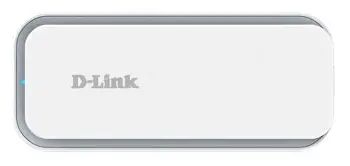
One thing I appreciated was the seamless fallback to 4G when 5G signal degraded; I rarely lost the connection completely. I was surprised, however, by how hot the adapter could get under prolonged transfers. After an hour of sustained upload it gets noticeably warm to the touch and the performance sometimes dipped slightly as it throttled. The LED signal indicators are useful but a little optimistic — when the app showed “excellent” signal, throughput sometimes told a different story.
Build quality and daily use
The D501 is compact, with a matte plastic shell and a small, rather stiff protective cap for the connector. It’s small enough to leave attached to a laptop during travel, but because it protrudes a bit I preferred using a short USB-C extension cable to reduce stress on the laptop port. The companion app provides basic diagnostics and a one-tap reconnect which I used when switching carriers or locations.
What bothered me
- Driver quirks after macOS updates forced occasional reinstallation.
- The unit gets hot during long uploads, which made me worry about longevity.
- Occasional carrier compatibility edge cases — a couple of regional MVNO SIMs didn't work without customer support from the carrier.
Who the D501 is for
In my experience the D Link D501 is best for someone who needs reliable mobile broadband for work, particularly people who frequently move between locations with varying cellular quality. It’s less suitable for users who expect mmWave-level top speeds or who prefer a plug-and-play experience on every platform without occasional driver fuss.
Discover deals on Electronics — updated daily.
View Offers →Popsa Photo Book — my hands-on review
I used Popsa to convert candid family photos, phone snapshots, and a small DSLR collection into physical books. I placed two orders several weeks apart to test consistency: one 20-page softcover and one 48-page hardcover with a matte finish. I used both the smartphone app and the web uploader so I could assess both workflows.
Ordering and user experience
What I appreciated immediately was Popsa’s automated layout engine. I uploaded a batch of around 180 photos and let the app do the heavy lifting. The auto-layout created clean spreads and grouped images logically (portraits together, group shots on their own spread). I did go through the book afterward to adjust crops on a handful of photos — the auto-crop sometimes favored faces but trimmed important context.
The app's UI is simple and uncluttered. I liked that I could reorder pages by drag-and-drop and change layouts with a tap. The web uploader allowed slightly more granular control of image placement. Both workflows let me preview bleed and crop lines, which I used to ensure no faces got chopped at the spine.

Print quality and finishes
Popsa’s print quality was consistently good across the orders. Colors leaned a touch warmer than what I saw on my calibrated monitor — I noticed richer reds and slightly deeper shadows — but nothing so extreme it ruined images. The hardcover had a pleasant weight and the binding held up well when I thumbed through it. The softcover was lighter and more flexible; durable enough for casual use but not something I’d expect to last decades on a bookshelf.
Paper stock options were adequate: a standard photo paper and a thicker premium paper. I ordered one book on the premium paper and the difference was noticeable in the tactile feel and how blacks held detail. For the family album I preferred the premium matte finish; it reduced glare and made the images feel more like prints.
Delivery and packaging
Delivery took about a week to ten days to my location. Packaging was simple but protective; books arrived in a cardboard sleeve with a soft inner wrap. One small disappointment: on the second order one corner of the hardcover had a hairline misalignment in the trim — not enough to be unusable, but visible if you’re picky. I contacted customer support and received a friendly reply and a partial refund credit; their response was prompt, which I appreciated.
What bothered me
- Automated crops occasionally removed important background context — manual correction was necessary for a few spreads.
- Color warmth differed from my monitor; if you have strict color needs you’ll want to compensate in your edits.
- One copy had a minor trim alignment issue, which was disappointing though not disastrous.
Who Popsa is for
Popsa is great for people who want a fast, attractive photo book without spending hours on layout. It's particularly good for gifts, baby books, and travel albums. If you’re a photographer with strict color-control workflows or you sell books as products, you might want a more professional vendor — but for family albums and keepsakes, Popsa struck a nice balance of speed, quality, and price.
Pros & Cons
D Link D501 5G Adapter
- Pros: Fast real-world 5G speeds in strong coverage areas; solid fallback to 4G; compact and portable; simple companion app with diagnostics.
- Cons: Gets warm under load; occasional driver issues after OS updates; some SIM compatibility edge cases; protrudes from laptop without extension cable.
Popsa Photo Book
- Pros: Fast, easy auto-layout that saves time; good print quality and pleasant paper options; reliable delivery and responsive customer service; good value for personal projects.
- Cons: Auto-cropping sometimes trims important content; colors can be slightly warmer than screens; occasional minor trim/binding inconsistencies.
Comparison
| Aspect | D Link D501 5G Adapter | Popsa Photo Book |
|---|---|---|
| Primary purpose | Mobile internet connectivity (cellular-to-USB) | Printed photo books / keepsakes |
| Best for | Remote workers, travelers, temporary rentals | Busy parents, gift-givers, travel photo albums |
| Ease of use | Easy on Windows/macOS, small Linux setup required | Very easy — automated layouts with manual tweak options |
| Reliability | Depends on carrier coverage; stable when signal strong | Consistent prints, occasional minor trim variance |
| Portability | High — pocketable adapter | Low — physical product, but easy to ship/gift |
| Longevity | Electronic device — susceptible to heat/wear | Physical book — longevity depends on paper and care |
| One-time vs recurring | One device purchase; ongoing data plan costs | Per-order cost; useful as occasional purchase |
| When to choose | If you need reliable mobile internet and already use cellular data | If you want a fast, attractive printed album without manual layout work |
Buying guide — how to decide
These two products solve very different problems, so the decision comes down to your primary need. I’ll walk through the key questions I asked myself while testing both.
1. What problem are you solving?
If you need mobile broadband — for video calls, cloud backups, or streaming while traveling — the D501 is the relevant product. If you want to turn photos into a tangible keepsake to gift or display, Popsa is the right category.
Find top-rated Electronics products at great prices.
See Deals →2. Budget and ongoing costs
With the D501 you pay once for the adapter, but you must have a cellular plan that supports the required data. Think about monthly costs and data caps — heavy backups over mobile data can get expensive. With Popsa, costs are per book; ordering more pages, premium paper, or faster shipping increases price but there are no recurring fees beyond new orders.
3. Technical comfort
The D501 is mostly plug-and-play on mainstream OSes, but occasional driver reinstall or small configuration on Linux may be necessary. Popsa requires almost no technical skill; upload, review, and confirm. If you don’t want to fiddle with drivers, make sure your OS is supported.
4. Quality vs convenience
If ultimate color accuracy or professional-grade binding is critical, Popsa may not match high-end lab prints. For quick, heartfelt gifts, it’s excellent. Similarly, the D501 offers very good convenience and speed, but if you require enterprise-grade mobile VPNs and guaranteed SLAs, you may need a dedicated mobile-router solution from a different class of product.
5. Test and verify
For the D501, test with your carrier’s SIM (or ask the seller about return policies) and check coverage maps for your main locations. For Popsa, order a single copy or a small sample book first to verify color and paper choices before placing a larger or multi-copy order.
6. Practical tips from my experience
- If you buy the D501, use a short USB-C extension to protect your laptop port and improve airflow around the adapter.
- Watch for firmware and driver updates — keeping the adapter updated solved a couple of stability problems for me.
- For Popsa, edit your photos for color and contrast before uploading; small adjustments compensate for the slight warmth I noticed in prints.
- Use the manual crop tool in Popsa when faces are close to the edges — auto-layout is great but not perfect.
- If you're ordering multiple copies of a Popsa book as gifts, order one copy first to check for trimming issues before placing a bulk order.
Conclusion — which should you buy?
After using both products for several months I can say they each delivered what I needed in their respective categories. The D Link D501 5G adapter became my dependable backup internet when I traveled for work; I liked its compactness, the reasonable speeds in good coverage, and how it let me keep large uploads moving without hunting for Wi‑Fi. That said, the heat under sustained use and occasional driver reinstallation were noticeable irritants.
Popsa, on the other hand, made creating physical albums fast and painless. I appreciated the automated layouts, the solid hardcover option, and how quickly a complete, presentable book arrived. The main frustrations were minor: automated cropping that occasionally cut out important parts of a photo and a slight color warmth compared with my monitor. For family albums and gifts, those are easy to work around and didn’t spoil the sentimental value.
So, buy the D Link D501 if your priority is staying connected on the go and you’re willing to manage a small amount of device maintenance and an ongoing data plan. Buy Popsa if you want an easy way to turn digital photos into a polished, physical book with minimal design time. If both needs sit on your to-buy list, I don’t think you’ll regret either purchase — they simply satisfy very different parts of real life.